
Alberta Furnace & Heating Services | Infloor Heating
Providing Quality In-Floor & Radiant Heating
In-floor Heating is by far the most comfortable and efficient way to heat your home. It is easily installed in new home basements and garage areas and can also be used to heat main and second floors by using a gypcrete overpour system.
Bringing your ideas to life! The Alberta Furnace & Heating Services team it happy to provide quality in-floor heating services and assistance to homes across the Calgary area.
Our services include (but are not limited to):
- In-Floor Heating Servicing
- Custom In-Floor Heating Design
- Custom Baseboard Radiation Design
- In-Floor Heating Troubleshooting
If you don’t see your specific service needs listed above, please feel free to ask in a contact form query.
What to Consider & Where to Begin
From the unique layout of your home/space to the systems at work within it, in-depth, thoughtful design is crutial to having an efficient, functional in-floor heating system.
So where do we begin?
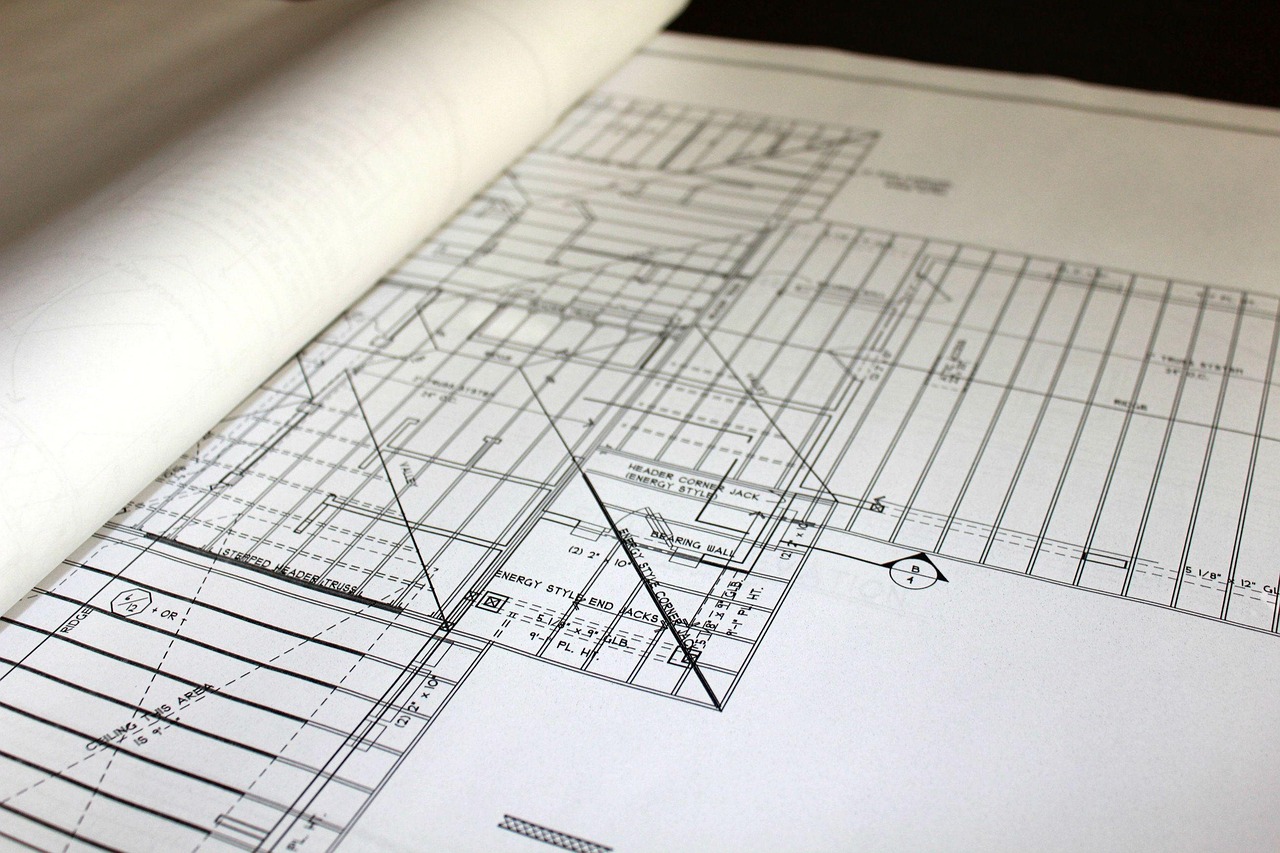
Step one: Understanding your house plans.
A good set of house plans is essential in preparing a proper set of mechanical drawings, heating/cooling load calculations, material takeoffs and a detailed quote.
In order to design the in-floor tubing layouts, a heat loss calculation must be done. These calculations determine the loop lengths, tube spacing, tube diameter and number of loops per manifold and supply & return line sizes to manifolds. The heat loss calculation also allows for proper heat source selection.
For more information on heat source types and in-floor heating tubing options, please review our FAQ below or feel free to contact us.
Step two: Consider confounding variables.
In-floor heating can be affected (positively and otherwise) by other HVAC elements. These are important to take into account!
For instance, air conditioning can be installed as a ductless split air conditioning system. This will guarantee a much more even space temperature since hot air wants to rise and cold air does the opposite. Alternatively, proper humidification can also be helpful within a home [read more about the benefits of humidification]; however, it can lead to complications (condensation, mold, and mildew to name a few) if it’s not carefully considered when added to the air conditioning & in-floor heating system design.
Step three: Custom design & mitigating consequences.
Poor design/installation can cause problems, of which include:
- Inconsistent floor temperatures (cold spots/hot spots);
- Extremely long warm up times (ie: temperature swings);
- Repeated pump failure;
- Poor space temperature control;
- Expansion tank failure;
- Zone valve failure.
Now, it is important to note that most of the above problems can be corrected—yes, even after move-in. However, it is far better to do the brain work before the actual installation where possible.
When in the planning stages of your home, here are some things to look for to ensure the best possible outcome:
- Heat loss & cooling load calculations.
- Tubing layout drawings for in-floor heated areas showing: (i) flow per loop; (ii) loop length; (iii) spacing.
- Detailed piping & wiring schematic showing: (i) all connected equipment; (ii) equipment selections; (iii) electrical requirements; (iv) pipe sizes/flows.
- Detailed quote for design, material & labour;
- Contractor to be licensed and experienced in all of the above aspects in order to design/install a system that will function properly from the day you move in.
The Alberta Furnace & Heating Services team is not only knowledgeable on different forms of in-floor heating, but are also well-equipped to navigate other elements which can impact in-floor heating functionality. With careful thought and skillful design expertise, we are here to help! Please feel free to contact us with any further questions you may have.
Frequently Asked Questions

What tubing options are there?
Tubing for infloor heating systems is available in two types:
- Crosslinked polyethylene with oxygen barrier
- Crosslinked polyethylene without oxygen barrier
Tubing with no oxygen barrier can be used but requires the installation of non-ferrous system components (no cast iron, no steel, no malleable iron). If designed for properly, it can be cost effective to use regular pex pipe but BUYER BEWARE!
Homes heated with an in-floor heating system require a minimum of 1/3 air change per hour provided by a ducted fan powered system. In Alberta (or climates similar to Alberta), the use of a double-core air-to-air heat exchanger is the best way to achieve this. These units come in various sizes and will provide fresh air into your home year round. Efficiencies range from 80% at -28°C to 90% when outdoor temperatures are above -5°C.
What are my heat source options?
Heat sources come in all kinds of shapes and sizes!
We will try to highlight a few of them here for you:
Boilers
- Pros
- Low mass-boiler heats up fast
- Lower price
- Cons
- Due to design, lifespan is limited to +/-25 years.
Cast Iron Boilers
- Pros
- High mass-slow to heat up
- Due to design, long lifespan of +/-40 years
- Cons
- Fairly expensive
- Due to high mass, boiler room can possibly overheat when vent damper is closed and boiler is not firing.
Stainless Steel Wall-Hung Boilers
- Pros
- Low mass-small compact design
- Direct vented condensing. Will be +95% efficient, in most cases.
- Cons
- Due to design, lifespan limited to +/-25 years.
- Fairly expensive.
Combination System Heaters
- Pros
- Low cost
- Cons
- These systems only suitable for small, slab-heated areas-ie less than 1000 sq.ft.
- Limited heat output
Water Heaters
- Pros
- N/A—We do not recommend the use of a waterheater to provide energy for infloor heating applications (for more information, please refer to the ‘Cons’)
- Cons
- Very inefficient, 45%
- Very limited heat output. (up to 1000 s.f.).
- Low water temperatures,only (110-120 °F) at capacity
Where can I go to find additional information?
If you have particular questions, we are always willing to help. Give us a call at 403-289-0089 or send us an email through our Contact page, and we’d be happy to get back to you ASAP!
If you’d like to read more related information, here are some links to related websites:
Air Elimination – www.spirotherm.com
Boilers – www.viessmann-us.com
Boilers – www.burnham.com
Boilers – www.laars.com
Boilers – www.alliedboilers.com
Boilers – www.nythermal.com
Controls – www.tekmarcontrols.com
Controls – www.hbxcontrols.com
Expansion Tanks – www.amtrol.com
In-floor Tubing – www.uponor.ca
Pumps – www.grundfos.com
Zone Valves –www.honeywell.ca
ALBERTA FURNACE & HEATING SERVICES